
CRM's Role in Coastal Construction Business Growth
Customer relationship management (CRM) in coastal construction is specialized software that unifies leads, projects, permits, and client data into one system, giving contractors full visibility across every phase of a build. The role of CRM in coastal construction business goes well beyond contact storage. Coastal contractors face a distinct set of pressures: tidal zone regulations, multi-state licensing, wetlands permitting through bodies like the Virginia Marine Resources Commission (VMRC), and clients who expect real-time communication. Generic spreadsheets and email threads cannot handle that load. Highlevelcrm-rconstructionsolutions was built with over 30 years of construction experience to address exactly these conditions, and the results contractors report speak for themselves.
How does CRM integrate with coastal construction project management?
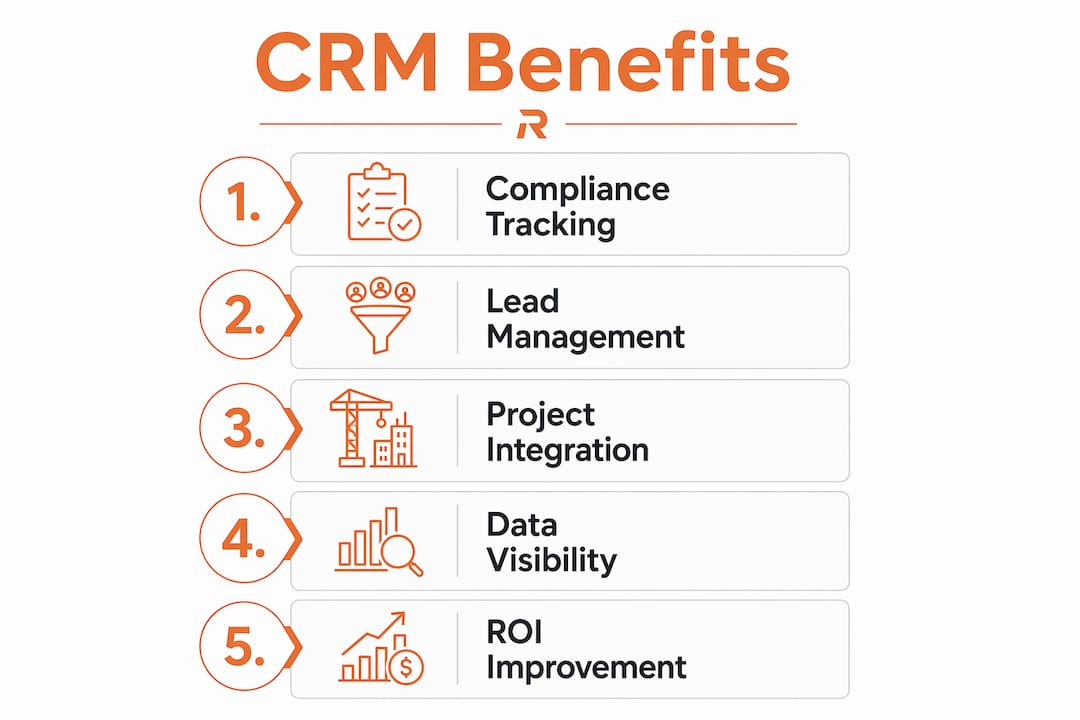
CRM integration with project management tools is the single biggest operational upgrade a coastal construction firm can make. When your sales team closes a deal, every detail, including budget, scope, and client expectations, transfers directly to your delivery team without manual re-entry. CRM-PM integrations link those details automatically, eliminating the miscommunication that kills project margins.

Coastal construction management adds a compliance layer that inland firms rarely face. Your CRM can function as a live repository for permit deadlines, license renewals, and environmental approvals. Tracking complex coastal permitting deadlines in the CRM reduces the risk of project halts caused by expired environmental permits at local boards like VMRC or wetlands authorities. A missed permit renewal can shut down a job site for weeks. That is a cost no contractor should absorb.
Here is what a well-integrated CRM tracks for a coastal construction firm:
- Multi-state contractor license renewal dates and status
- Environmental permit expiration alerts for wetlands, tidal zones, and coastal setback zones
- Subcontractor compliance documents and insurance certificates
- Client approval milestones tied to permit submission windows
- Project phase gates that require regulatory sign-off before work proceeds
Pro Tip: Set your CRM compliance alerts to fire 60 days before any permit expiration, not 30. Coastal regulatory agencies often have processing backlogs, and a 30-day window is rarely enough time to renew without a gap.
The sales-to-delivery handoff is where most coastal firms lose money. When your project manager inherits a job with incomplete notes, they spend the first two weeks catching up. A CRM that pushes the full “as-sold” record directly into your project management platform, including client preferences, agreed scope, and flagged risks, cuts that ramp-up time significantly.
What are the key benefits of CRM for lead tracking in coastal construction?
Lead tracking is where CRM systems for coastal projects deliver fast, measurable results. Coastal construction buyers often take months to decide, comparing multiple contractors across storm resilience, permitting experience, and local reputation. Without a system, those leads go cold. CRM systems centralize lead capture and automate follow-ups, reducing lost opportunities and improving client responsiveness.
The practical benefits for coastal builders fall into four clear areas:
-
Centralized lead capture. Every inquiry from your website, referral network, or trade show lands in one place. You see the lead source, the project type, and the last touchpoint at a glance. No more digging through email threads to find a prospect’s budget.
-
Automated follow-up sequences. A CRM sends timed follow-up messages after an estimate, after a site visit, and after a proposal without your team lifting a finger. Coastal clients who are comparing three contractors will often choose the one who follows up fastest and most consistently.
-
Full client communication history. Every call note, email, and document lives in the client record. When a project manager takes over from a salesperson, they read the full history in minutes. That continuity builds client trust and reduces the “I already told your company that” friction.
-
Repeat client and referral tracking. CRM adoption leads to stronger revenue streams and more repeat clients. Coastal construction is a relationship business. Tracking past clients, their project history, and their referral activity lets you reach out at the right time with the right offer.
Contractors who use CRM tools for coastal builders report higher bid win rates because their follow-up is consistent and their proposals are informed by detailed client data. The difference between winning and losing a coastal renovation bid often comes down to responsiveness and preparation, both of which a CRM directly supports.
How does CRM deployment impact ROI in coastal construction?
CRM investment pays back faster than most contractors expect. Full payback on a properly configured CRM with strong user adoption typically occurs within 6–18 months. That range reflects differences in firm size, adoption rate, and how deeply the CRM integrates with existing tools.
The efficiency gains come from several directions at once:
- Reduced administrative time. Automating compliance tracking, follow-ups, and reporting frees your team from hours of manual work each week.
- Fewer errors in project handoffs. When the “as-sold” record transfers automatically, change orders caused by miscommunication drop.
- Eliminated duplicate data entry. CRM-project management integration creates a single source of truth, cutting the manual re-entry that wastes time and introduces errors.
- Higher lead conversion. Highlevelcrm-rconstructionsolutions users report lead conversion rate increases of up to 35%, which translates directly into revenue.
Construction firms adopting CRM report measurable improvements in team productivity, customer experience, and data visibility after implementation. Those improvements compound over time. A firm that closes more bids, retains more clients, and avoids costly permit delays generates significantly more revenue per year than one running on spreadsheets and memory.
The cost savings from eliminating legacy systems also matter. Many coastal firms pay for separate tools to manage contacts, track bids, store documents, and send reminders. A single CRM platform replaces several of those subscriptions while doing each job better.
What challenges do data silos create for coastal construction firms?
Data silos are the most common and most damaging operational problem in coastal construction management. A silo forms when your sales team stores client information in one place, your project team tracks job details in another, and your compliance records live in a third. No one has the full picture. Decisions get made on incomplete information.
Data silos between sales and project teams cause inefficiencies that successful firms avoid by integrating CRM to create unified data flow and visibility. The practical damage shows up as duplicate work, missed deadlines, and client complaints about being asked the same questions twice.
Coastal construction firms face a specific version of this problem. Your sales team knows the client’s storm resilience requirements and their budget flexibility. Your project team knows the site’s tidal zone restrictions and the subcontractor schedule. When those two knowledge sets never connect, you get change orders, delays, and unhappy clients.
CRM integration addresses this directly:
- One shared client record that both sales and operations can access and update
- Permit and compliance data visible to everyone who needs it, from the estimator to the site supervisor
- Automated alerts that notify the right team member when a deadline or milestone approaches
- Reporting dashboards that show pipeline health, project status, and compliance standing in one view
Pro Tip: When rolling out a CRM, assign one person in sales and one in project management as data stewards. Their job is to audit the shared records weekly for the first 90 days. That habit prevents fragmentation before it starts.
Automating compliance, lead management, and follow-ups saves significant time and reduces the administrative burden unique to coastal construction’s complex regulatory environment. The firms that break their data silos early gain a real competitive edge. They respond to clients faster, catch permit issues before they become shutdowns, and deliver projects with fewer surprises.
Key Takeaways
A CRM built for coastal construction unifies compliance tracking, lead management, and project data into one system, making it the most direct path to operational efficiency and revenue growth for coastal contractors.
| Point | Details |
|---|---|
| Compliance tracking prevents shutdowns | CRM systems store permit deadlines and fire alerts before coastal regulatory windows close. |
| CRM-PM integration eliminates handoff errors | As-sold project details transfer automatically to delivery teams, cutting miscommunication. |
| Lead automation increases win rates | Automated follow-ups and centralized lead data help coastal contractors close bids faster. |
| ROI payback within 6–18 months | Properly configured CRMs with strong adoption pay back their cost within one to one and a half years. |
| Data silos cost money and clients | Unified CRM data flow removes the duplicate entry and missed information that drive up project costs. |
What I’ve learned about CRM adoption in coastal construction
Coastal construction is one of the most operationally complex niches in the entire industry. I have seen firms with excellent crews and strong reputations lose clients and money simply because their internal systems could not keep up with the pace and complexity of coastal work. The permit environment alone, with VMRC, wetlands authorities, and local coastal zone boards all in play, demands a level of organizational discipline that spreadsheets cannot provide.
What surprises most contractors when they finally adopt a purpose-built CRM is not the lead tracking or the reporting. It is the compliance visibility. Knowing exactly which permits expire when, and having the system remind you 60 days out, removes a category of risk that previously lived entirely in someone’s memory or a sticky note on a monitor.
My honest advice: do not evaluate CRM tools on feature lists alone. Evaluate them on how well they fit the specific workflow of a coastal contractor, from the first client inquiry through permit filing through project closeout. A generic CRM will give you a contact database. A construction-specific CRM gives you operational control. The importance of CRM in construction is not theoretical. It shows up in your win rate, your client retention, and your ability to sleep at night knowing no permit is about to expire unnoticed.
— Rowena
How Highlevelcrm-rconstructionsolutions supports coastal builders
Highlevelcrm-rconstructionsolutions was developed specifically for contractors, not adapted from a generic sales platform. It includes automated lead tracking, compliance alert workflows, custom reporting dashboards, and direct integration with industry-specific project management tools.
Coastal contractors using Highlevelcrm-rconstructionsolutions gain a system that understands the difference between a standard residential build and a tidal zone renovation with VMRC oversight. The platform’s CRM features for construction are built around the workflows you already use, not workflows you have to adapt to. If you want to see exactly how the platform handles lead management, compliance tracking, and project integration, the features and FAQ page is the right place to start.
FAQ
What is the role of CRM in a coastal construction business?
A CRM in coastal construction centralizes client data, automates lead follow-ups, and tracks permit and compliance deadlines in one platform. It connects sales and project delivery teams so no critical information gets lost between departments.
How does CRM help with coastal permitting and compliance?
CRM systems store permit expiration dates and send automated alerts before deadlines pass, preventing project shutdowns caused by expired environmental or coastal zone permits.
What is the typical ROI timeline for a construction CRM?
Full payback on a properly configured construction CRM with strong user adoption typically occurs within 6–18 months, driven by efficiency gains and higher lead conversion rates.
How does CRM reduce data silos in coastal construction firms?
CRM integration with project management tools creates a single shared record for every client and project, eliminating duplicate data entry and giving both sales and operations teams the same real-time information.
Can a CRM improve client retention for coastal contractors?
Yes. CRM adoption builds stronger client relationships through consistent communication, full interaction history, and timely follow-ups, all of which increase repeat business and referrals.