Ringless Voicemail for Contractors: Map Consent in CRM, Cut TCPA Risk
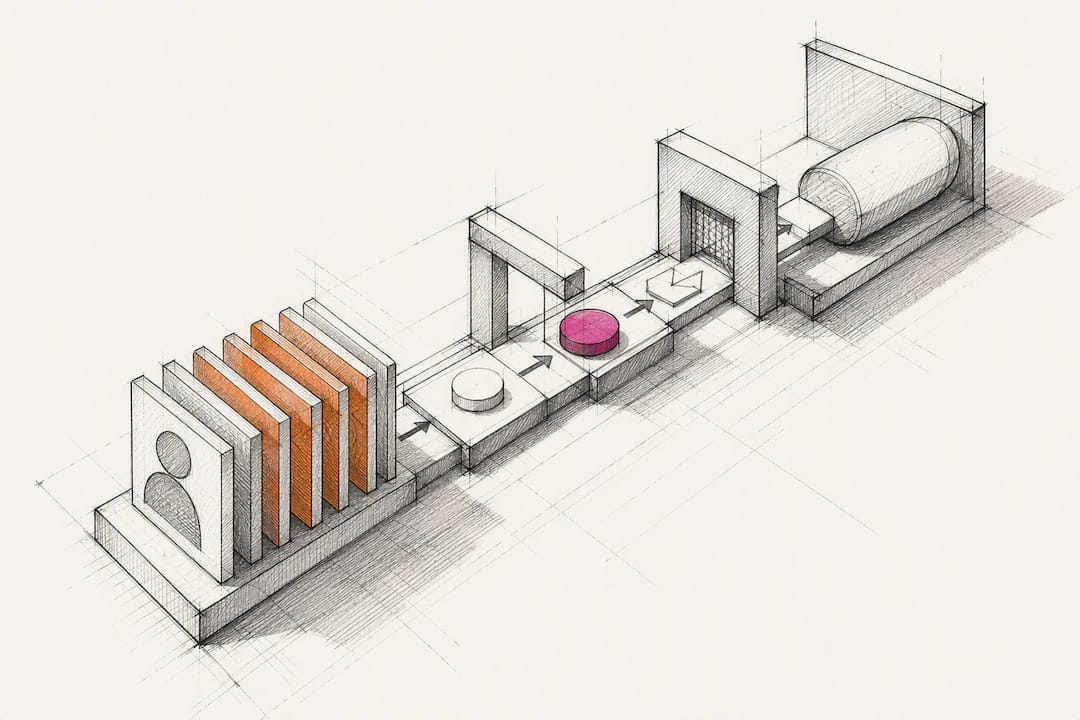
Ringless voicemail is legally treated as a telephone call, and construction contractors can use it only when prior express consent is verified and logged for that number. Before you run a single drop, do three things: verify consent status for every number on the list, record the proof inside your CRM, and keep the message project-specific rather than promotional. Skip any of those steps and you are taking on real legal exposure.
TL;DR:
- Only verify consent, record proof, and make messages project-specific before using ringless voicemail to avoid legal risks.
- Courts treat RVM as a call under TCPA, meaning prior express consent is required for wireless numbers, especially for telemarketing.
- Use RVM mainly for warm leads with established relationships, avoiding cold lists or broad promotional campaigns.
- Document all consent and verification details immutably within your CRM to support compliance and streamline audits.
- Select vendors with clear indemnity, auditing, DNC scrubbing, and data policies, and test campaigns thoroughly before large-scale deployment.
Table of Contents
- Is Ringless Voicemail Contractors Use Subject to the TCPA?
- When Does RVM Fit a Construction Outreach Sequence?
- What Counts as Valid Consent, and How Do You Document It?
- How Should Contractors Write RVM Messages and Sequences?
- Building RVM Into Your Contractor CRM Workflow
- Vetting RVM Vendors Without Taking on Their Risk
- An Honest Take on Ringless Voicemail for Contractors
- Run Compliant RVM Campaigns Through One CRM
- Sources
Is Ringless Voicemail Contractors Use Subject to the TCPA?
Yes. The FCC’s declaratory ruling treats ringless voicemail delivered to wireless numbers as a “call” under the Telephone Consumer Protection Act, not as some clever workaround that dodges phone regulations because it skips the ring. That single classification determines everything else about how contractors should run these campaigns.
The statute itself, 47 U.S.C. § 227, restricts autodialed and prerecorded voice calls to wireless numbers absent consent. Because RVM delivers a prerecorded message straight to voicemail, courts have applied the same restrictions to it that apply to a live robocall. Contractors who assume “no ring, no problem” are working from a myth that has already cost other businesses real money.
Statistic Callout: One TCPA settlement tied to a ringless voicemail campaign covered roughly 53,000 phone numbers and resulted in a multi-million dollar payout. Exposure scales directly with list size, which is exactly why a purchased list of unverified numbers is one of the riskiest moves a contracting business can make.
A few distinctions matter before you build a campaign:
- Telemarketing calls promoting your services generally require prior express written consent.
- Informational calls, like a scheduled appointment reminder to an existing customer, may only need express consent, not the written form.
- Wireless numbers carry the strictest requirements; landlines have more legal room but fewer contractors reach leads that way anymore.
- Per-call damages under the TCPA can run into the hundreds of dollars per violation, and violations multiply fast across a list.
Legal commentary from firms like Benesch is blunt about this: no vendor platform is “inherently compliant.” Compliance depends on how you use it, whose numbers you have, and what proof you can produce if challenged.
When Does RVM Fit a Construction Outreach Sequence?
Ringless voicemail earns its place in a construction marketing stack when the recipient already has a relationship with your business. It performs worst as a cold-outreach tool aimed at strangers.
Good fits:
- Bid follow-ups on a proposal you already submitted to a known contact
- Deadline reminders for permit windows, material lock-in pricing, or seasonal scheduling
- Re-engagement with warm leads who requested a quote but went quiet
- Targeted updates tied to an active project the recipient is part of
Avoid it for:
- Cold or purchased contact lists with no documented relationship
- Broad promotional blasts trying to fill a slow month
- Any list where you cannot confirm phone type or consent source
Construction buying cycles rarely move fast. A commercial build might involve a GC, an owner’s rep, and a facilities director, each weighing a decision over weeks or months. RVM works best as a light-touch reminder inside that longer cycle, not as a replacement for the relationship-building calls and bids that actually close the deal.
Pro Tip: Reserve RVM for leads who are already three or more touches into your pipeline. A cold prospect hearing an unsolicited voicemail from a contractor they’ve never spoken with is far more likely to flag it as spam than a warm lead who requested a bid two weeks ago.
What Counts as Valid Consent, and How Do You Document It?
Consent is the entire foundation here, and “the lead gave us their number on a form” is not automatically enough. You need to know the source of that number, the exact language they agreed to, and whether that language covers marketing calls specifically.
- Capture consent at the source. A bid request form, an estimate signup, or a signed contract should include explicit language authorizing calls and voicemail messages at the number provided, not just a hidden line in your privacy policy.
- Separate express consent from express written consent. Informational outreach to an existing customer may only need express consent. Telemarketing typically needs the signed, written version, which most contractors handle through a checkbox with clear language at the point of data collection.
- Verify phone type before sending. Landline numbers carry different rules than wireless numbers, and a verification pass before every campaign catches numbers that were ported or reassigned.
- Scrub against Do Not Call lists before any send, every time, not just once when the list was first built.
- Log everything immutably. The insight from CRM-driven contractors is that consent metadata needs to live in searchable, unchangeable fields so an audit report can be produced in minutes, not days.
| CRM field | What it stores |
|---|---|
| Consent text | Exact wording the lead agreed to |
| Consent source | Form, contract, or call where it was captured |
| Timestamp | Date and time consent was recorded |
| Campaign ID | Which RVM drop the number was included in |
| Delivery receipt | Vendor confirmation the message reached voicemail |
How Should Contractors Write RVM Messages and Sequences?
Generic pitch language performs poorly and increases complaint risk, because a message that sounds like a sales blast is exactly what triggers a lead to report it. Project-specific, time-bound hooks work better. A line referencing “your kitchen remodel bid expiring Friday” lands differently than “call us for your next project.”
Industry data backs this up directly: construction outreach performs best when it references a specific scope or cost detail rather than a generic service pitch, and when it sits inside a multi-channel sequence rather than standing alone.
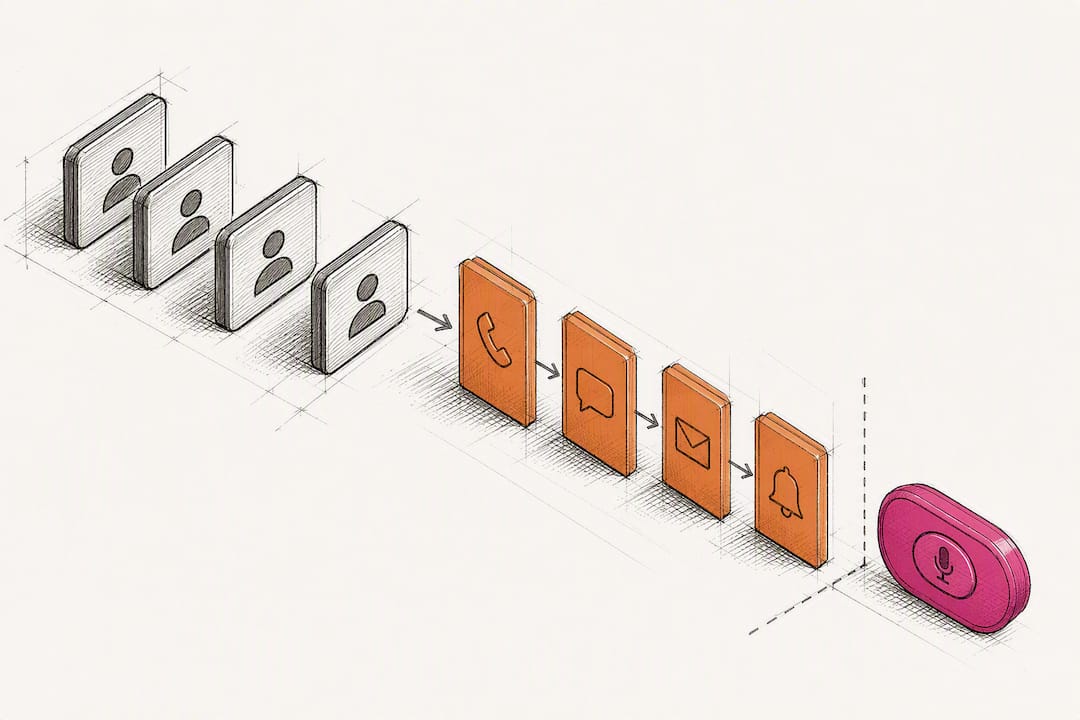
- Email first, restating the bid or update in writing with a clear next step.
- Social touch (if applicable) reinforcing brand visibility around the same project timeline.
- RVM drop as a short, personal nudge, referencing the specific project or deadline, never a generic pitch.
- Live call within one to two days of the voicemail, while the message is still fresh.
- Follow-up email or text confirming whatever the call resolved or didn’t.
Keep the voicemail itself under 30 seconds. State who you are, the specific project or bid it relates to, and one clear action, like calling back or replying to confirm a time. Include the minimal required disclosure of who is calling and skip anything that sounds scripted.
Pro Tip: End every RVM message with a question the recipient can answer in one sentence, like “does Thursday still work for the site walk?” A specific question generates far more callbacks than an open-ended “give us a call whenever.”
Building RVM Into Your Contractor CRM Workflow
An RVM campaign that lives outside your CRM is a liability with no paper trail. The delivery data, consent records, and reply signals all need to map into the same lead record your sales team already works from.
Fields worth mapping directly into each lead: consent status, delivery log timestamp, reply flag, and campaign ID. From there, automations do the heavy lifting:
- Auto-create a follow-up task the moment a delivery receipt confirms the drop went through.
- Move a lead’s pipeline stage automatically when they reply or call back.
- Auto-suppress a number the instant a complaint or opt-out comes in, no manual step required.
Contractors who wire delivery logs and consent data into automated follow-up have reported conversion increases near 35 percent, largely because no warm reply sits unanswered for days. Track it on a dashboard with four numbers: reply rate, conversion lift, total consented numbers active in your pipeline, and a standing compliance audit report you can pull on demand. That last metric matters more than any of the others if you ever get a legal inquiry.
Vetting RVM Vendors Without Taking on Their Risk
Businesses stay liable for TCPA violations even when a third-party platform sends the actual message, a point legal analysts make repeatedly. That means vendor selection is a legal decision, not just a procurement one.
Before signing with any RVM provider, require:
- Indemnity language covering TCPA claims tied to their delivery infrastructure
- Audit access to delivery logs and consent-matching reports, not just a summary dashboard
- Documented DNC scrubbing methods run before every send cycle
- Clear data handling and deletion policies for numbers you remove from a list
- A test batch on a small, fully consented sample before any full-list send
If a vendor cannot produce a consent-matching report on request, or hedges when asked about their scrubbing method, stop the campaign and get counsel involved before sending anything further.
An Honest Take on Ringless Voicemail for Contractors
RVM can genuinely speed up follow-up on warm leads, but it is not a shortcut around consent law, and treating it that way is how contracting businesses end up in a settlement instead of a sales pipeline. The contractors who get real value from it are the ones running small, fully consented pilots, instrumenting every send through their CRM, and measuring actual reply rates before scaling anything.
Start with your warmest list, the bid follow-ups and re-engagement leads where consent already exists on paper. Skip the purchased lists entirely. The math on reputation and legal exposure just doesn’t favor mass drops to strangers.
— Rowena
Run Compliant RVM Campaigns Through One CRM
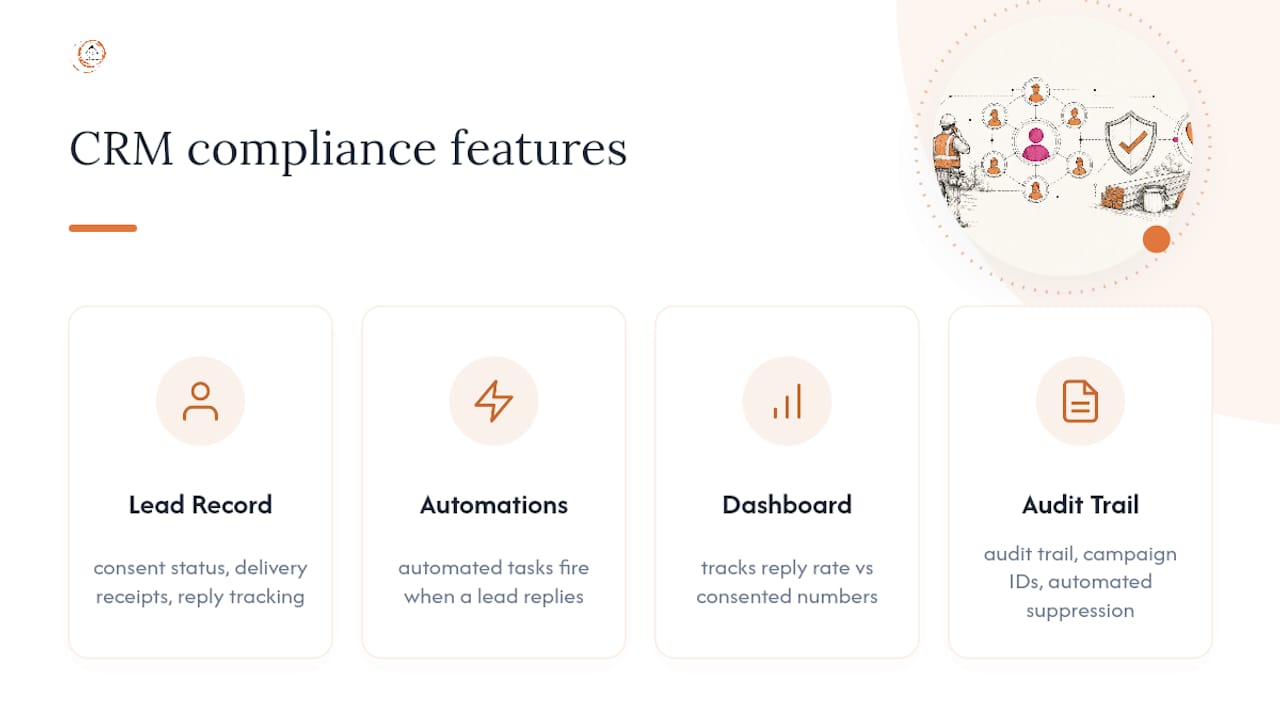
Every requirement covered here, consent fields, delivery logs, campaign IDs, automated suppression, has to live somewhere a contractor can actually see it, and that’s the gap most generic CRMs leave open. Our CRM platform was designed specifically for construction outreach, so consent status, vendor delivery receipts, and reply tracking all sit inside the same lead record your team already works from every day.
Instead of stitching together a spreadsheet for compliance and a separate tool for follow-up, you get automated tasks that fire the moment a lead replies, a conversion dashboard that tracks reply rate against consented numbers, and an audit trail accessible quickly. That structure is also what drives the kind of follow-up gains documented among contractors who automate their lead response instead of chasing it manually.
Review the CRM Features & FAQs page to see the exact fields and automations available, or check Industries We Serve to see how it fits your specific trade, then book a demo to walk through your own outreach setup.
Sources
For legal verification, keep the FCC’s declaratory ruling and the TCPA statute text on hand. For practical construction outreach design, the B2B lead generation guide for construction and Buildberry’s project-controls content both cover data segmentation in more depth.
This article is general information, not a substitute for advice from a qualified lawyer. Consult a qualified legal professional about your own circumstances before acting on anything here.
- FCC Declaratory Ruling and Order on ringless voicemail
- Think ringless voicemail avoids the TCPA? Courts disagree — Bubeck Law
- Ringless Voicemail: Don’t Believe The TCPA Compliance Hype | Benesch Law
- B2B lead generation for construction: 2026 complete guide
- 47 U.S.C. § 227 - Restrictions on use of telephone equipment
Recommended
- Mobile CRM for Contractors: Field-Ready Lead-to-Invoice
- Why Every Contractor Needs a CRM: Unlocking Growth and Efficiency in Construction
- Reduce Marketing Costs with CRM Automation for Contractors
Signed up, or thinking about it? We build the inside of the account — pipelines, workflows, funnels, nurture, migration. Built for construction. Contact us.
Affiliate disclosure. We’re a GoHighLevel affiliate. Sign up through our link and we may earn a commission at no cost to you, or buy direct. Build-out is billed separately, never a software markup.